Category: Ukraine

  • Treating PTSD in Ukraine

    Treating PTSD in Ukraine

    At Task Force Antal, we often reflect on what freedom truly means. For many of us– especially our Veteran volunteers like X– freedom isn’t just about rights. It’s about security, stability, and the ability to live without fear. 

    “If you’re not able to relax, you’re not really free. Your mind is constantly on edge. It has an effect on your body, even if you’re not physically restrained. When it comes to freedom, I think security is required. Not just the freedom to move physically– but the peace of mind to be still.” 

    Across Ukraine today, millions don’t have that luxury. Families attempt to live normal lives, only to shelter moments later from inbound rockets. Each strike brings trauma, loss, and a growing sense that peace, and true freedom, remain distant. 

    That’s why Task Force Antal is expanding our mission beyond the battlefield and into the clinics, hospitals, and recovery rooms. 

    We’re launching a targeted campaign to deliver Stellate Ganglion Block (SGB) treatment to Ukraine– an advanced, minimally invasive intervention that rapidly reduces post-traumatic stress symptoms by interrupting the fight-or-flight response at its source. 

    Leading this initiative is Dr. James Lynch, MD, a former physician of TFA’s founders and global expert in SGB therapy, who brings decades of experience treating combat-stressed Special Operations forces. With over 1.8 million Ukrainian Veterans and civilians- suffering from PTSD, the need is immediate and growing. 

    In partnership with Ukraine’s Ministries of Veterans Affairs, Health, and Defense, we’re committed to: 

    ·         Training Ukrainian doctors in ultrasound-guided SGB 

    ·         Establishing regional treatment hubs 

    ·         Administering SGB to an initial group of 60 patients 

    ·         Integrating this therapy into Ukraine’s national care model 

    Freedom is not just the absence of oppression– it’s the presence of peace. SGB helps restore that peace by calming the body and the mind. 

    Help us deliver relief where it’s needed most. 

    Support TFA. Support Ukraine. Support freedom.

  • Brigid, Fiona, and Vivienne Antal Return to Ukraine to Aid Task Force Antal’s Humanitarian Mission 

    Brigid, Fiona, and Vivienne Antal Return to Ukraine to Aid Task Force Antal’s Humanitarian Mission 

    In a world where childhood often revolves around school, sports, and friends, the Antal sisters—Brigid, Fiona, and Vivienne—are experiencing a different kind of adventure. The three young daughters of Christine and Mark Antal, founders of Task Force Antal, recently returned to Ukraine for the second time, joining their parents on the front lines of TFA’s humanitarian efforts. At just 11, 11, and 10 years old, these young girls are not only witnessing history but are actively contributing to life-saving missions in a country torn by conflict. 

    Helping Distribute Aid to Hospitals

    One of the most impactful moments of their trip was helping distribute medical supplies to hospitals across Ukraine. Brigid, Fiona, and Vivienne rolled up their sleeves and dove into the heart of the action, joining Task Force Antal volunteers in unloading trucks filled with critical aid. The supplies—burn dressings, IV kits, medications, and trauma care equipment—were destined for hospitals struggling to keep up with the influx of patients. 

    “It was hard work, but it felt really good to know that we were helping people who really needed it,” said Vivienne, the youngest of the trio. The girls moved from hospital to hospital, not just handing over supplies but engaging with doctors and nurses, hearing firsthand about the challenges faced by medical professionals in a war zone. 

    For Christine and Mark, it was a proud moment to watch their daughters step up. “We want our girls to understand the importance of giving back,” said Christine. “They saw the reality of what’s happening here, and they wanted to be part of the solution.” 

    Supporting FLEM Training

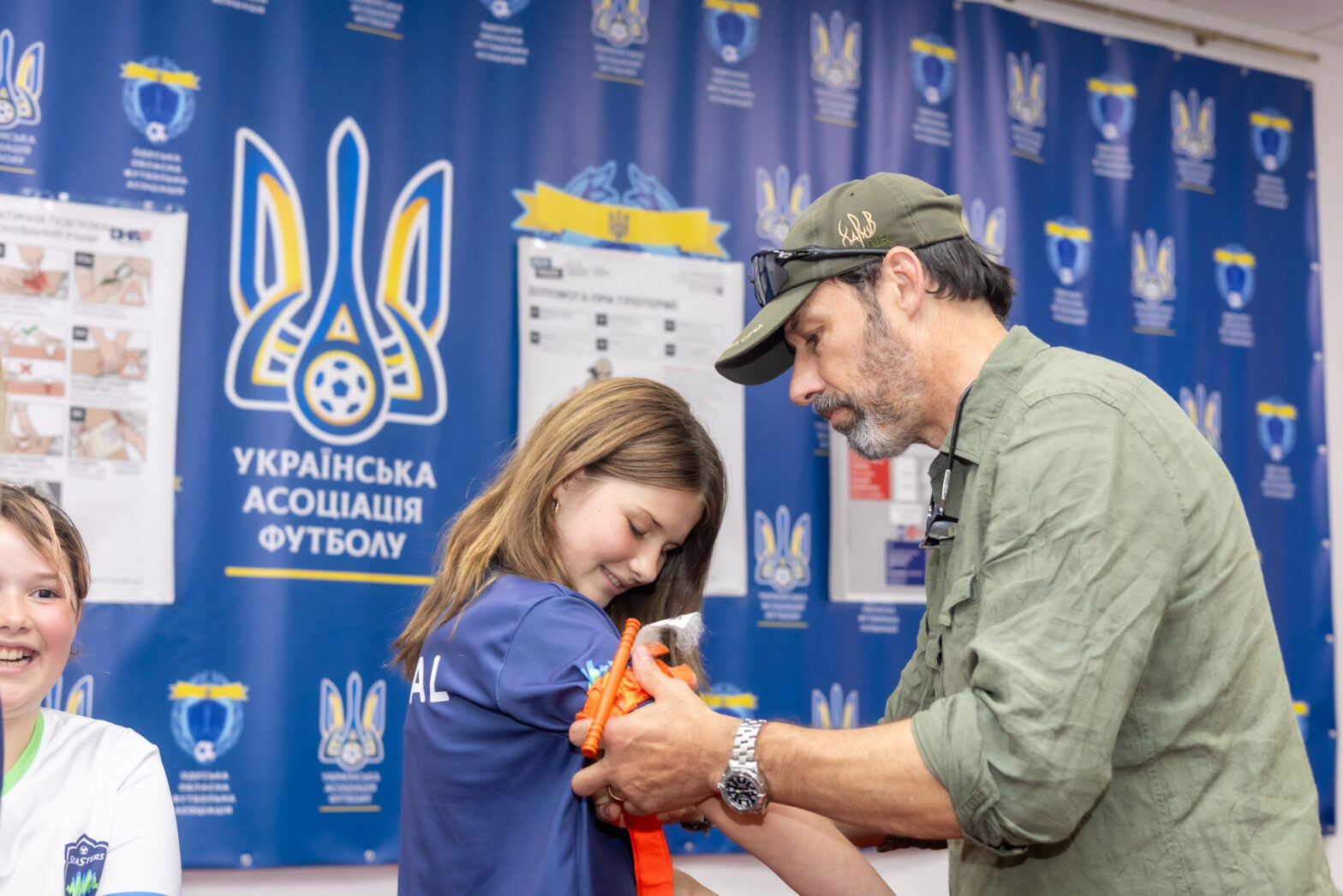
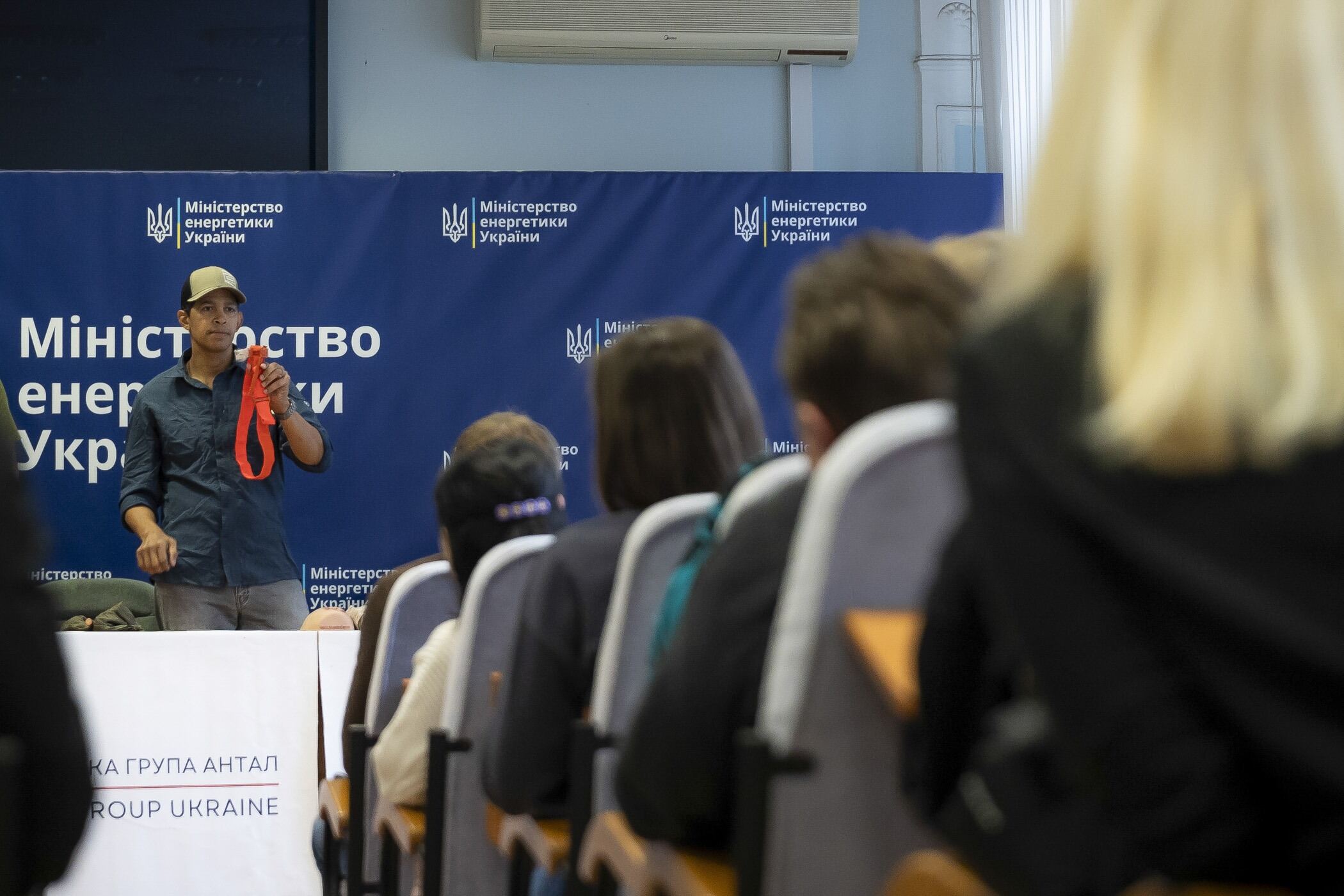
    The girls’ involvement didn’t stop at delivering aid. Brigid, Fiona, and Vivienne also lent their energy and enthusiasm to Task Force Antal’s Front-Line Emergency Medicine (FLEM) training sessions. These courses, led by U.S. SOF veterans, teach Ukrainian civilians critical first aid skills, such as how to stop bleeding and provide initial trauma care. 

    Brigid took on the role of a mini-instructor, helping demonstrate basic first aid techniques to attendees, while Vivienne and Fiona assisted in handing out supplies and guiding participants through practical exercises. The sisters quickly became an integral part of the training team, their youthful presence serving as a reminder of the community spirit at the heart of humanitarian work. 

    “We were teaching people how to save lives,” said Vivienne. “It was cool to see how everyone wanted to learn, even when things were scary.” 

    A Special Soccer Session in Odesa

    Their journey took a unique turn in Odesa, where the girls took part in a special soccer training session with Ukrainian girls of the same age. Organized in collaboration with the local professional team, the WFC SeaSters, this event was about more than just sports—it was an opportunity to connect, show solidarity, and offer a bit of normalcy to children whose lives have been disrupted by war. 

    The soccer field was filled with laughter, shouts of encouragement, and the universal language of play. For a few hours, the Antal sisters and their new Ukrainian friends were just kids, kicking a ball, sharing smiles, and forging connections that transcended borders. 

    “It was so much fun to play with them,” Fiona shared excitedly. “We didn’t speak the same language, but it didn’t matter. We were all just having fun together.” 

    The session also served as a morale boost for the local community, showcasing the strength and resilience of Ukrainian girls. The Antals’ involvement underscored Task Force Antal’s broader mission of not only providing aid but also fostering hope and unity among those they serve. 

    A Family Making a Difference

    For the Antal family, this trip was about more than just fulfilling a mission; it was a chance to instill values of empathy, service, and resilience in their daughters. Brigid, Fiona, and Vivienne’s journey to Ukraine highlights how young people can make a significant impact, even in the most challenging environments. 

    “They are learning firsthand that being a part of something bigger than yourself is one of the greatest gifts,” said Mark.  

    As the Antal sisters return home, their experiences in Ukraine will undoubtedly shape their perspectives for years to come. Their story is a powerful reminder that the drive to help others knows no age limit and that even the smallest hands can make a big difference. 

  • Air Strikes At All-Time High

    Air Strikes At All-Time High

    Not 24 hours after TFA completed a Front-Line Emergency Medicine (FLEM) training in Kremenchuk, Ukraine, the city was hit by Russian bombs. Several civilians were injured.

    Luckily, dozens of FLEM participants had just learned how to administer emergency aid. They immediately took out the med kits TFA had given them after the FLEM training session and got to work saving lives in their community.

    “We’re so thankful you were here,” one participant texted a TFA volunteer. “When are you coming back?”

    TFA is proud to provide life-saving FLEM training to Ukrainian civilians, and more requests for training flood in every day. We need your help to bring FLEM to the people who need it most.

    Air strikes are at an all-time high. Will you donate today to support life-saving FLEM training in Ukraine?

  • This Past January in Ukraine

    This Past January in Ukraine

    It was a cold January day in Ukraine. A dark, wintry evening loomed ahead, one of many wintry evenings over the course of the long conflict between Russia and Ukraine since Russia’s invasion in February of 2022. In an auditorium filled with people, some taking pictures, others chatting and drinking tea, a young girl approached a Task Force Antal volunteer and held up her phone.

    On the screen: a video of a rocket striking just outside her apartment. “Thank you for being here,” she said. “Thank you for helping me feel safe.”

    Task Force Antal volunteers had just finished an intensive front-line emergency medicine (FLEM) course, one of countless sessions TFA has held in cities throughout Ukraine since the conflict began. The goal: to help innocent civilians like this young girl gain the skills to respond when Russian bombs strike their homes, their schools, and their loved ones.

    All it takes, all too often, is a tourniquet—but you must know how to use it.

    No one should die from a preventable injury. This is the ethos of the brave special operations combat veterans and TFA volunteers who put themselves in harm’s way, willingly entering a warzone to share the life-saving skills they learned as Soldiers.

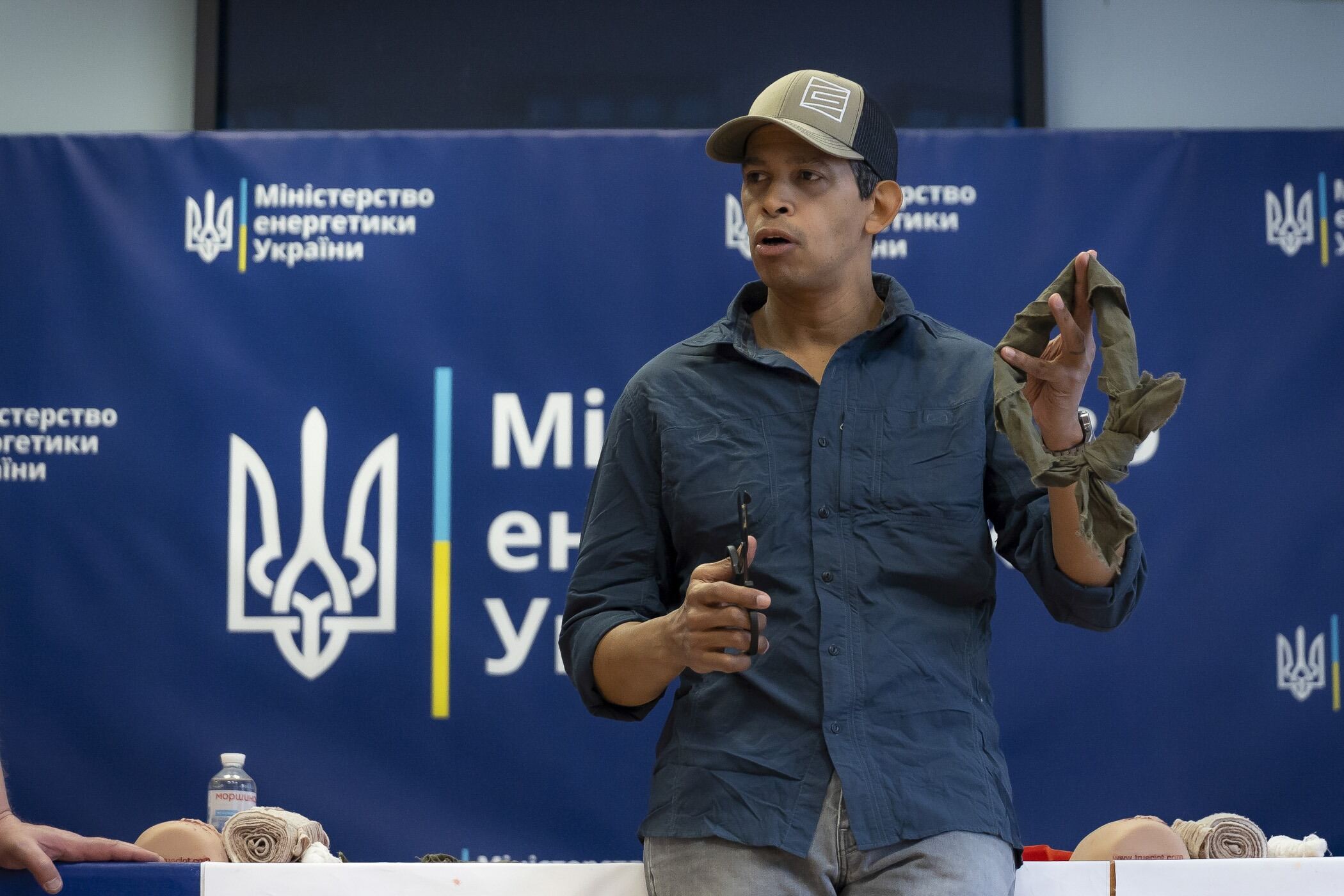
    Since the outbreak of the war in Ukraine, TFA has brought front-line emergency medical (FLEM) training to thousands of civilians around the country. Led by veteran volunteers from the United States and Ukranian veterans and interpreters, FLEM teaches people how to properly utilize simple medical equipment that can mean the different between life and death.

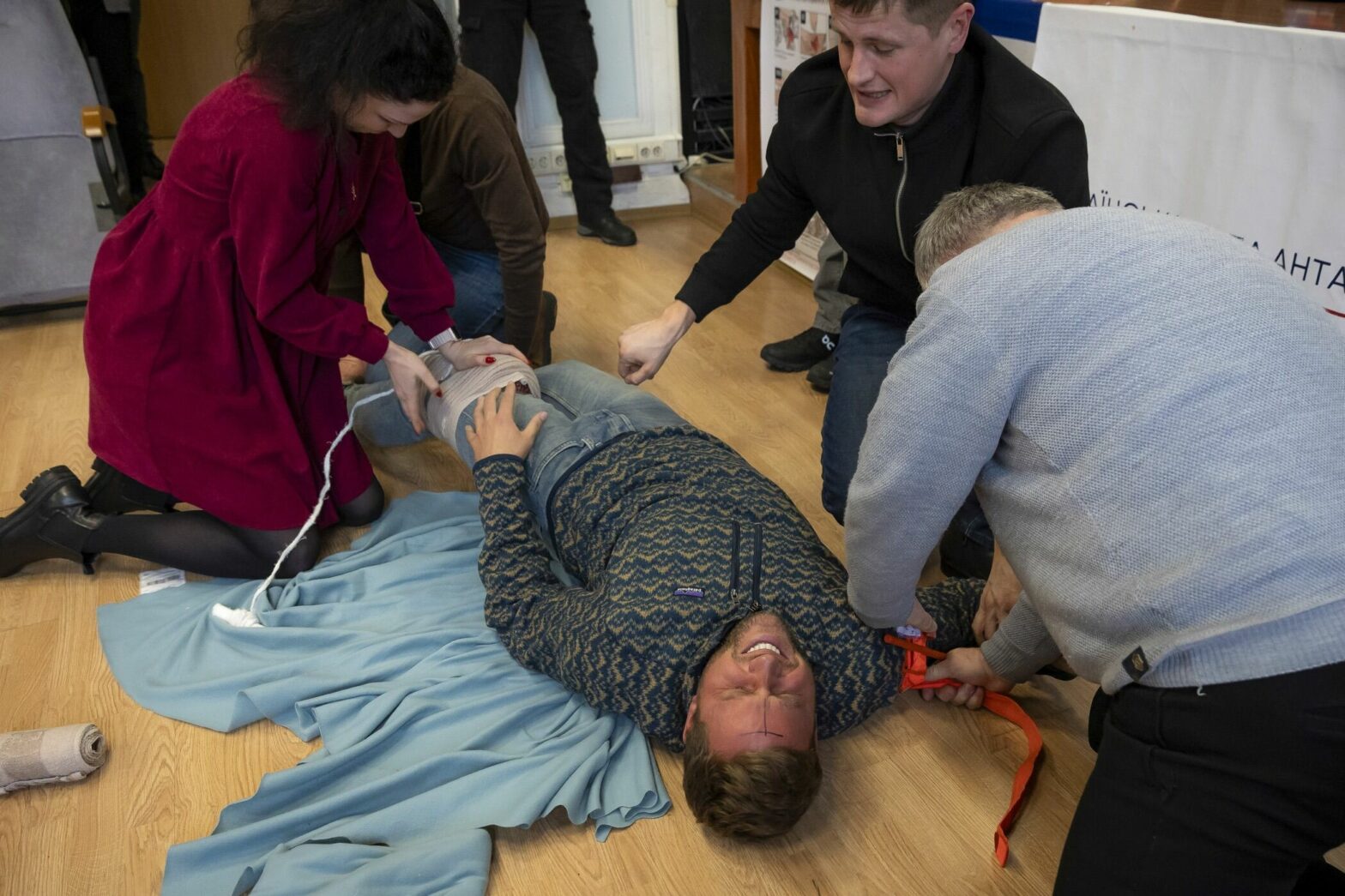
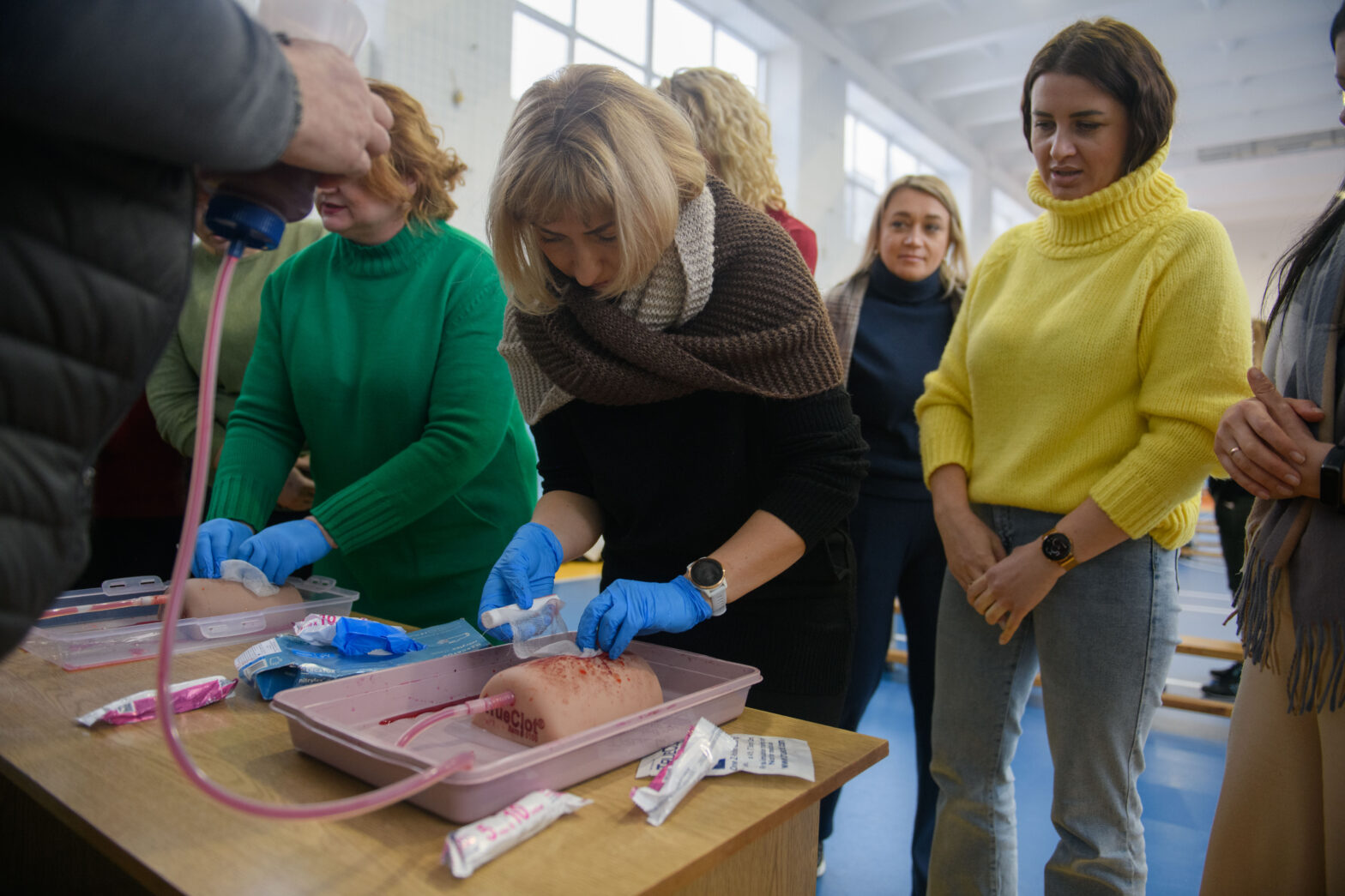
    Using tourniquets, pressure bandages, and gauze—and fake blood for theatrics—they teach Ukrainians young and old how to prevent someone from bleeding out and dress wounds until further help can arrive.

    FLEM methods proved fruitful after a missile struck a railway in Kherson just last month. A group of civilians trained by TFA used their new skills to stabilize someone who had been injured. Thanks to them, he survived.

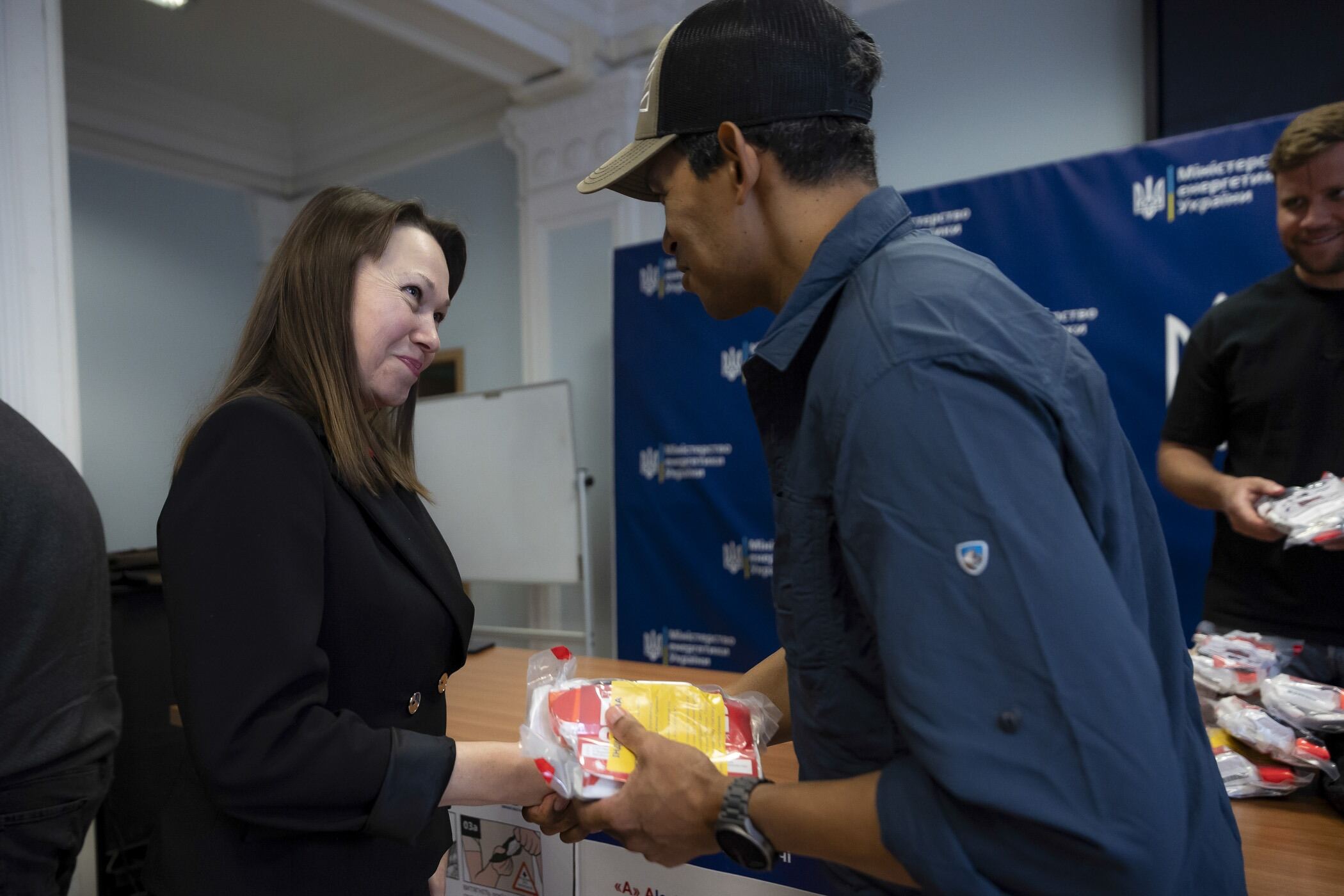
    After a FLEM training session, each participant receives a medical kit with all the supplies they just learned how to use effectively. FLEM trainings are open to anyone interested and held in schools, auditoriums, and even bomb shelters when necessary. Once the training session ends, everyone comes together, sharing stories and refreshments. Their warmth shines a light in the darkness of these times.

    Driven by a deep sense of purpose, TFA’s team remains devoted as ever to empowering Ukrainian communities. We could not do it without your support. Will you make a donation today to help fund FLEM training in Ukraine?

  • Military Dogs: A Critical Part of Our Operation

    Military Dogs: A Critical Part of Our Operation

    Task Force Antal Co-Founder, Mark, says that he is alive today because of a K9. 

    Mark was on a mission in Afghanistan, moving through chest-high grass with his two-man team and his military dog, Spido. “10 feet in front of me, all I saw was muzzle flash and then I was seeing stars,” Mark remembers. Spido jumped into action, taking two rounds to his back, giving Mark and his team a critical window of opportunity to engage. Mark was hit once in the hand and twice in the chest plate, a piece of body armor worn over the torso, but Spido had blocked the worst of the shots, sacrificing himself and saving Mark.  

    Mark served as a K9 handler at his Fort Bragg-based unit for almost a decade, training dogs in the military to find people hiding, detect explosives, and save lives. To become an elite hero dog, K9s go through extensive training that begins with testing how the dogs work with different environmental factors, respond to excessive noise, slide down ropes and even jump out of airplanes. From there, the dogs that pass this stage are assigned to a handler, who takes them through a program lasting several months to work on drills and detection skills.  

    Military dogs are a critical member of the special operations teams they work with, using their detection skills to scope out scenes and alert their handlers to potential dangers. While military technology keeps advancing, dogs are often able to detect threats that tools miss, and Mark has witnessed this firsthand. Once, while scaling a craggy ridgeline, the team was confident in their safety, but their dog was not. Like the canary in a coal mine, a military dog can signal danger with just their demeanor. When they released the dog, he quickly found two men hiding in the rocks.   

    While many people feel a close bond to their own dog, the intense nature of the work and the amount of time spent together means that it is common for the military community to become incredibly close with their K9s. “You get close to them because they’re like your brothers,” Mark said. “We were all in the same pack.” Mark’s first dog, Rex, made it to retirement and came to live with the Antal family at Fort Bragg. By the time Rex was ready to be put down, he had made such an impact that 100 people from the Fort Bragg community came to the house the night before to see him and bring him toys.  

    Task Force Antal knows firsthand the lifesaving power of dogs in the military. To continue carrying out lifesaving work in Ukraine, we’ve been working with the Ukrainian Railway Security Services to develop and improve the Iron Dogs unit. This unit of elite K9s and their handlers will protect and patrol the railways, which are now the only safe source of transportation in the country for food, supplies, and people. Their work has already proved invaluable in keeping the people of Ukraine safer, but building this unit requires funding.  

    “The best thing you can do if you want to help but you can’t be on the ground there is to send what you can, donation wise. If you want to do it for the Iron Dogs, everything goes towards buying food or the reconstruction of facilities.”

    “The best thing you can do if you want to help but you can’t be on the ground there is to send what you can, donation wise,” said Mark. “If you want to do it for the Iron Dogs, everything goes towards buying food or the reconstruction of facilities.”  

    On this K9 Veterans Day, the team at Task Force Antal is honoring the four-legged friends who work alongside our troops, venturing into dangerous areas to save lives. As Mark put it, “If it wasn’t for them doing their job, a lot more sons and daughters wouldn’t be coming home.”  

    Support Iron Dogs

  • Meet Eugenia Ihnateva, CEO of Antal Group Ukraine 

    Meet Eugenia Ihnateva, CEO of Antal Group Ukraine 

    When Russian missiles come for Ukraine, Eugenia Ihnateva has a mission: to protect her beloved homeland, no matter what. As the CEO of Antal Group Ukraine, her goal is to help civilians learn how to respond to disaster so that when the worst happens, they can confidently spring into action.  

    For Eugenia, working with Task Force Antal, the parent NGO to Antal Group Ukraine, is far more than a job. It’s a way of life and an act of service for the country she calls home.  

    “The most frightening thing for humans is the unknown,” she says. “What we don’t know frightens us.” Certainly, there are few dangers more frightening than a bomb headed directly toward the people and place you love most. One of the most important things you can give people, Eugenia says, is information. Being prepared saves lives.  

    Born in Lviv to a medical family, Eugenia grew up at a cultural crossroads. Lviv represents the Great North of an ancient trade route traveled by merchants and visitors from all over the world dating back to the 13th century. People came to sell their goods, and many stayed. The result is a vibrant cultural diaspora. In Lviv, you’ll find streets named for Serbia and Bulgaria, Armenian and Jewish communities, and traditional religion coexisting with a lively appreciation for Eastern European folklore—not to mention the largest number of architectural monuments in Ukraine.  

    To Eugenia, it’s Ukraine’s most beautiful city. “We citizens are proud of the fact that we are born here,” she says.  

    That pride is evident in the efforts Eugenia has taken to fight for her country’s safety.  

    After graduating from the local university with a degree in English literature, Eugenia began her career as an English teacher in Poland. But after a few years, she realized that she wanted to do more than teach the present simple. She moved back to her beloved hometown of Lviv and began gathering professional experience as an interpreter.  

    In 2014, following her son’s birth and Russia’s invasion of Crimea, Eugenia found herself on a bus with 35 other linguists from the length and breadth of Ukraine, headed to work on a military base. She remembers asking herself, “What are you doing?” But soon her purpose became clear.  

    For almost a decade, Eugenia provided strategic translation to diverse military branches and specialties, playing a crucial role in translating tactical military plans for the highest echelons of command at the United States Embassy in Kyiv. She also provided key linguistic support to the U.S. Forces training the Armed Forces of Ukraine.  

    “I always wanted to be an interpreter,” says Eugenia. It felt right to apply her skills in such a meaningful way, creating connections between people by honoring their words.  

    Naturally, when Russia invaded her home, Eugenia immediately took action. She already had experience in a post-invasion world; now, with the escalation and full-scale invasion of Ukraine, Eugenia became a leader. 

    Former Commanders of the U.S. training mission Dave Jordan and Tim Cleveland connected Eugenia with TFA. Christine was already aware of Eugenia and her abilities, and soon she joined the team, quickly becoming an invaluable member. She immediately began facilitating humanitarian trips and supply drops, ensuring that Task Force Antal could communicate with the people they were determined to help. She led TFA in navigating the intricacies of the conflict on-the-ground, bringing more capability and native know-how to the rescue work. 

    Soon, Task Force Antal developed front-line emergency medical (FLEM) training to teach civilians how to provide life-saving first aid when missiles strike. Eugenia helped organize the very first FLEM trainings. Today, she plays an invaluable role in helping FLEM reach the communities that need it most.  

    “It’s one thing to interpret,” says Eugenia, “and another to see the audience for who they really are and make the experience resonate with them.” TFA works with groups of all sorts, from young children to recently displaced people whose homes and livelihoods have been destroyed by Russian bombs.  

    Each population has a different need. It takes an expert to not only translate word-for-word but also to make sure that the message is heard and that people walk away feeling more confident, more safe, and more prepared than they felt before.  

    At Task Force Antal, Eugenia is that expert. She coordinates TFA’s efforts with local authorities and civilians, translating and writing constantly so that everything runs perfectly. Of course, she never forgets to water the flowers at the office, too.    

    Beyond her work at Task Force Antal, Eugenia enjoys postmodern literature, speaks four languages (five if you count German, which she is currently studying), and is the proud member of a classical Ukrainian dance troupe, which has withstood both Covid-19 and the outbreak of war. In fact, the troupe only paused for a week after the war began before reuniting online to keep practicing.  

    In Ukrainian character dance, as in language, you can put on many masks. That’s what Eugenia loves about both: the freedom to dance between cultures and time, and to furnish one’s own meaning.  

    It is this freedom which Eugenia demands for Ukraine. “I want to tell people that we are alive,” she says, “and that we deserve freedom. We deserve not to be killed.”   

    Every country lives with its own problems, says Eugenia, and consequently it is difficult for people outside Ukraine to fully comprehend what words cannot describe. “You do not understand until you find yourself in the trenches,” she continues.  

    “The words are just words until you find yourself here, waking up in the middle of the night, waking your child, leaving your warm bed and saying goodbye to your apartment, which you may never see again, to rush to the bomb shelter and listen to the sounds of UAVs approaching. We call them motorcycles, because they sound like motorcycle engines. Will they land outside the city or on your home? You can never tell.” 

    But Eugenia is far from hopeless. Citing Navalny and Churchill, her advice is clear: “Don’t give up. Never give up. Evil waits for us to become desperate, because when you are desperate, you are vulnerable.” Vulnerability is not a luxury that the current situation allows.  

    Eugenia’s message applies equally to the artistry of dance and the brutality of war. “You must keep trying,” she says. “No one is perfect. No one is born a dancer or a soldier. It’s about experience, about trying hundreds and hundreds of times. On the thousand and first try, you will be good. Maybe.”